Why GTA V Nights Are Starting to Feel More Like a Modern AAA Game

U1D Team
May 29, 2026 · 8 min read
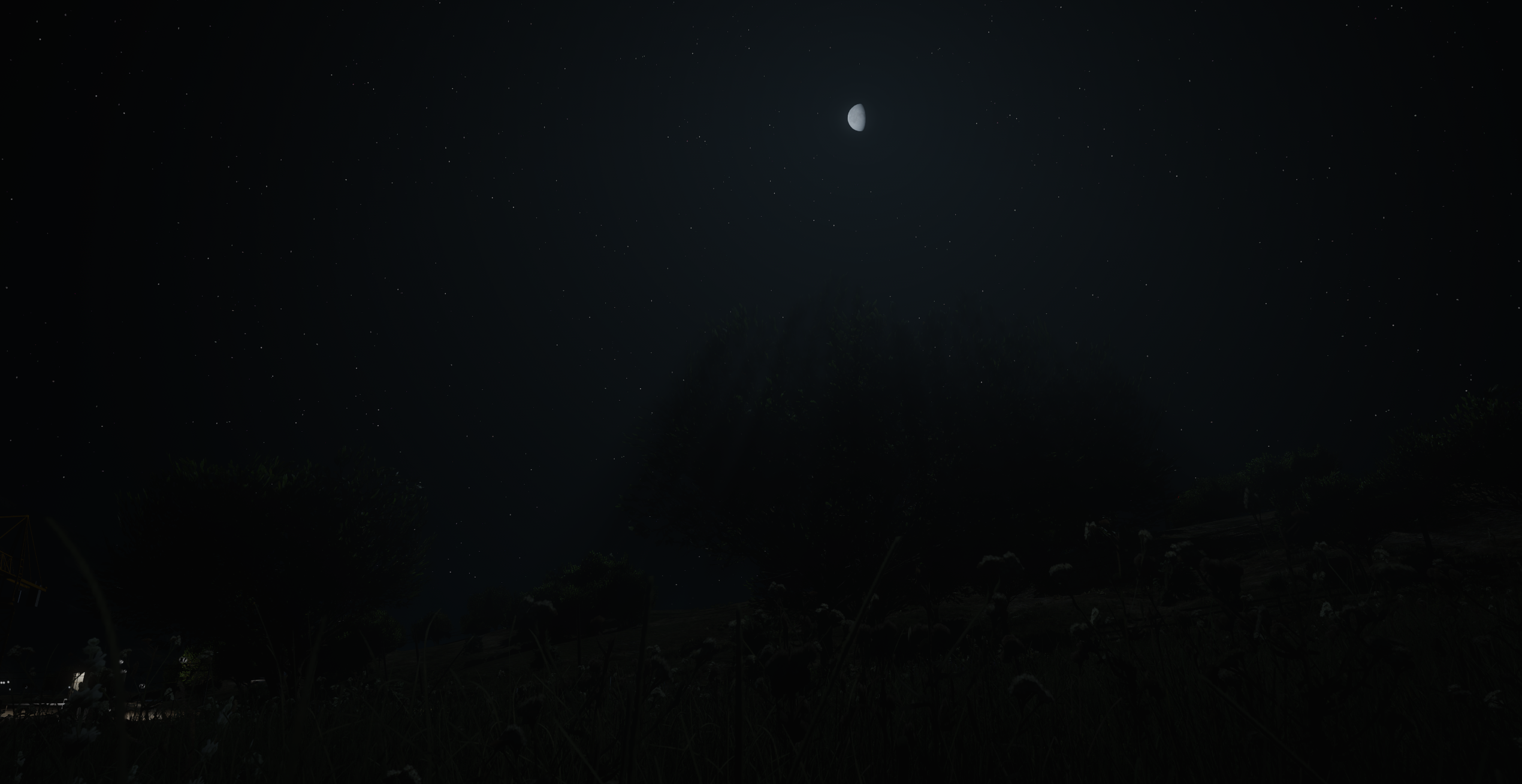
For most of Grand Theft Auto V's lifespan, graphics discussions have centered around the same visual features.
Players compared:
- Reflection quality
- Weather systems
- Daytime lighting
- Texture packs
- Vehicle shaders
- Color grading
While those improvements continue to be important, a new category of visual enhancement is rapidly becoming one of the most talked-about developments in the GTA V graphics community.
Atmospheric lighting.
More specifically, the way moonlight interacts with the game world.
As graphics developers continue pushing Rockstar's decade-old engine beyond its original limits, advanced nighttime rendering techniques are beginning to reshape how players experience Los Santos after dark.
One of the latest examples of this evolution is the introduction of volumetric moon rays, a feature designed to make moonlight feel less like a static light source and more like a living part of the environment.
For players searching for realistic GTA V graphics, immersive nighttime visuals, and next-generation atmospheric effects, this represents one of the most significant visual advancements released in recent memory.
The Difference Between Seeing a World and Feeling a World
Great graphics are not always about higher resolutions or sharper textures.
In many cases, immersion comes from atmosphere.
Think about some of the most memorable scenes in gaming.
Often, what makes them stand out isn't the individual assets on screen.
It's the mood.
The way light filters through fog.
The way shadows move across a landscape.
The way weather conditions influence visibility.
The way a distant light source affects an entire environment.
Atmospheric effects help transform a game world from something players simply observe into something they genuinely experience.
This is where advanced moonlight rendering begins to make a difference.
Why Moonlight Has Been Historically Difficult to Get Right
Unlike sunlight, moonlight presents a unique challenge for graphics developers.
The effect needs to be subtle.
Too bright and the scene feels unrealistic.
Too dark and players lose environmental detail.
The balance is incredibly difficult to achieve.
Most traditional lighting systems handle moonlight in a fairly basic manner.
The moon acts as a secondary light source, illuminating the environment without significantly interacting with atmospheric conditions.
The result is functional, but often lacks realism.
Nighttime scenes can feel flat, empty, or disconnected from the surrounding weather and environment.
This limitation has existed in countless games for years.
Modern graphics technology is finally beginning to address it.
When Light Becomes Part of the Environment
One of the defining characteristics of modern graphics engines is environmental interaction.
Rather than simply illuminating objects, light interacts with the world itself.
It passes through:
- Fog
- Dust
- Moisture
- Smoke
- Atmospheric particles
This interaction creates visible depth throughout a scene.
Instead of looking at a bright moon in the sky, players can actually see how that moonlight affects the atmosphere around them.
This is where volumetric lighting systems excel.
Volumetric moon rays simulate moonlight traveling through environmental conditions, creating realistic shafts of light that respond naturally to the surrounding atmosphere.
The effect may sound subtle on paper.
In practice, it can completely transform an entire scene.
Why Fog Finally Feels Alive
Fog has always been an important component of realistic graphics.
Yet in many games, fog often functions as little more than a visual filter.
It reduces visibility.
It changes colors.
It affects atmosphere.
But it rarely feels connected to the lighting itself.
Volumetric moon rays change that relationship.
When moonlight passes through fog, the atmosphere becomes illuminated.
Players begin to notice:
- Light scattering
- Environmental depth
- Layered visibility
- Dynamic contrast
Instead of existing separately, fog and lighting start working together.
The result is a world that feels far more natural.
The Hidden Impact on Open-World Exploration
One of the most interesting effects of advanced moonlight rendering is how it changes exploration.
Players often don't realize how much lighting influences navigation.
A forest feels different under realistic moonlight.
A mountain road feels different when illuminated by atmospheric lighting.
A desert landscape feels different when subtle beams of moonlight cut through nighttime haze.
These visual improvements help create a stronger sense of place.
Areas that players have visited hundreds of times suddenly gain new character.
The environment becomes more memorable.
More immersive.
More believable.
The Silent Transformation of Blaine County
While Los Santos receives most of the attention, some of the biggest visual gains can actually be found outside the city.
Regions such as:
- Mount Chiliad
- Sandy Shores
- Grapeseed
- Paleto Forest
- Raton Canyon
contain fewer artificial light sources.
This allows atmospheric lighting systems to shine.
Moonlight becomes the dominant visual element.
Fog becomes more noticeable.
Environmental depth increases dramatically.
These rural locations often showcase volumetric lighting effects better than anywhere else in the game.
For players searching for realistic GTA V night graphics, these areas provide some of the most impressive results.
Why Content Creators Are Paying Attention
The rise of cinematic GTA V content has changed what players expect from graphics modifications.
Content creators are no longer looking for simple visual upgrades.
They are looking for tools that improve storytelling.
Advanced moonlight rendering contributes to:
- Scene composition
- Environmental mood
- Visual depth
- Dynamic lighting
- Atmospheric immersion
Whether creating YouTube videos, cinematic trailers, short films, or photography projects, creators benefit from lighting systems that feel natural rather than artificial.
Volumetric moon rays offer exactly that.
The Shift Away From Traditional Graphics Comparisons
A few years ago, most graphics comparisons focused on side-by-side screenshots.
Today, players are becoming more sophisticated.
Rather than asking:
"Which mod has the best reflections?"
Many players are now asking:
"Which graphics package feels the most realistic?"
That distinction is important.
Realism is not determined by a single feature.
It comes from how multiple systems work together.
Lighting.
Weather.
Atmosphere.
Shadows.
Reflections.
Environmental depth.
Volumetric moon rays fit directly into this new generation of graphics development because they improve the relationship between all of these systems.
A Growing Focus on Nighttime Realism
Recent updates from leading graphics projects have shown a noticeable shift toward improving nighttime experiences.
Developers are increasingly investing resources into:
- Advanced atmospheric rendering
- Dynamic fog systems
- Environmental light scattering
- Volumetric effects
- Enhanced moonlight behavior
One of the latest additions to emerge from this trend comes from a prominent remastered graphics project that recently introduced volumetric moon rays as part of its continued effort to expand atmospheric realism throughout GTA V.
The addition reflects a broader movement within the graphics community toward creating environments that feel alive regardless of the time of day.
What This Means for the Future of GTA V Graphics
The continued development of atmospheric technologies suggests that graphics enhancements are entering a new phase.
Future improvements will likely focus less on individual visual features and more on environmental simulation.
Players increasingly want worlds that react naturally to:
- Weather conditions
- Lighting conditions
- Time of day
- Environmental variables
Volumetric moon rays represent a small piece of that larger vision.
Yet they also demonstrate how much potential still exists within Rockstar's aging engine.
Even after more than a decade, developers continue discovering new ways to redefine what GTA V can look like.
The Search for Better Night Graphics Continues
Search traffic related to GTA V nighttime visuals continues to grow every year.
Popular searches include:
- GTA V Night Graphics Mod
- GTA V Realistic Moonlight
- GTA V Volumetric Lighting
- GTA V Atmospheric Graphics
- GTA V Realistic Night Mod
- GTA V Moon Ray Effects
- GTA V Enhanced Nighttime Visuals
- GTA V Cinematic Graphics
- GTA V Next Gen Graphics
- GTA V Story Mode Graphics Mod
This growing interest reflects a larger trend within the community.
Players are no longer satisfied with visual upgrades that only look impressive during the day.
They want a complete experience.
An experience that feels realistic twenty-four hours a day.
Where the Darkest Hours Deliver the Best Visuals
The most impressive graphics upgrades are often the ones players don't immediately notice.
They are the features that quietly improve immersion every second the game is running.
Volumetric moon rays fall squarely into that category.
They do not change gameplay.
They do not introduce new content.
What they do is make the world feel more believable.
And in a game as iconic as GTA V, that may be one of the most valuable upgrades possible.
As nighttime rendering continues to evolve, features like atmospheric moonlight, environmental light scattering, and volumetric effects are becoming essential components of the modern GTA V graphics experience.
For players chasing the most immersive version of Los Santos ever created, the future is looking brighter than ever—even in the middle of the night.